Skip to content
Trekking

Everest Three Passes Trek

  • Duration: 19
  • Max altitude: 5,545m
  • Group size: 2 +
  • Grade: Hard
  • Best season: All

Accommodation: Lodge

The Everest Three Passes Trek is one of the most challenging and rewarding trekking journeys in the Everest region.

This extraordinary route offers a complete circuit through the high Himalayas, combining remote valleys, dramatic glaciers, and breathtaking views of the world’s highest mountains.

Unlike the classic Everest Base Camp trek, this route follows a more adventurous path through some of the most spectacular landscapes of the Khumbu region.

This route connects the three legendary high passes of the Khumbu: Kongma La (5,535 m), Cho La (5,367 m), and Renjo La (5,360 m).

Along the way, trekkers visit Everest Base Camp, climb the famous viewpoint of Kala Patthar, and explore the stunning turquoise lakes of Gokyo Valley while crossing high alpine terrain rarely seen on standard trekking routes.

This trek is ideal for experienced trekkers seeking a true Himalayan adventure that combines challenge, exploration, and some of the most spectacular scenery on Earth.
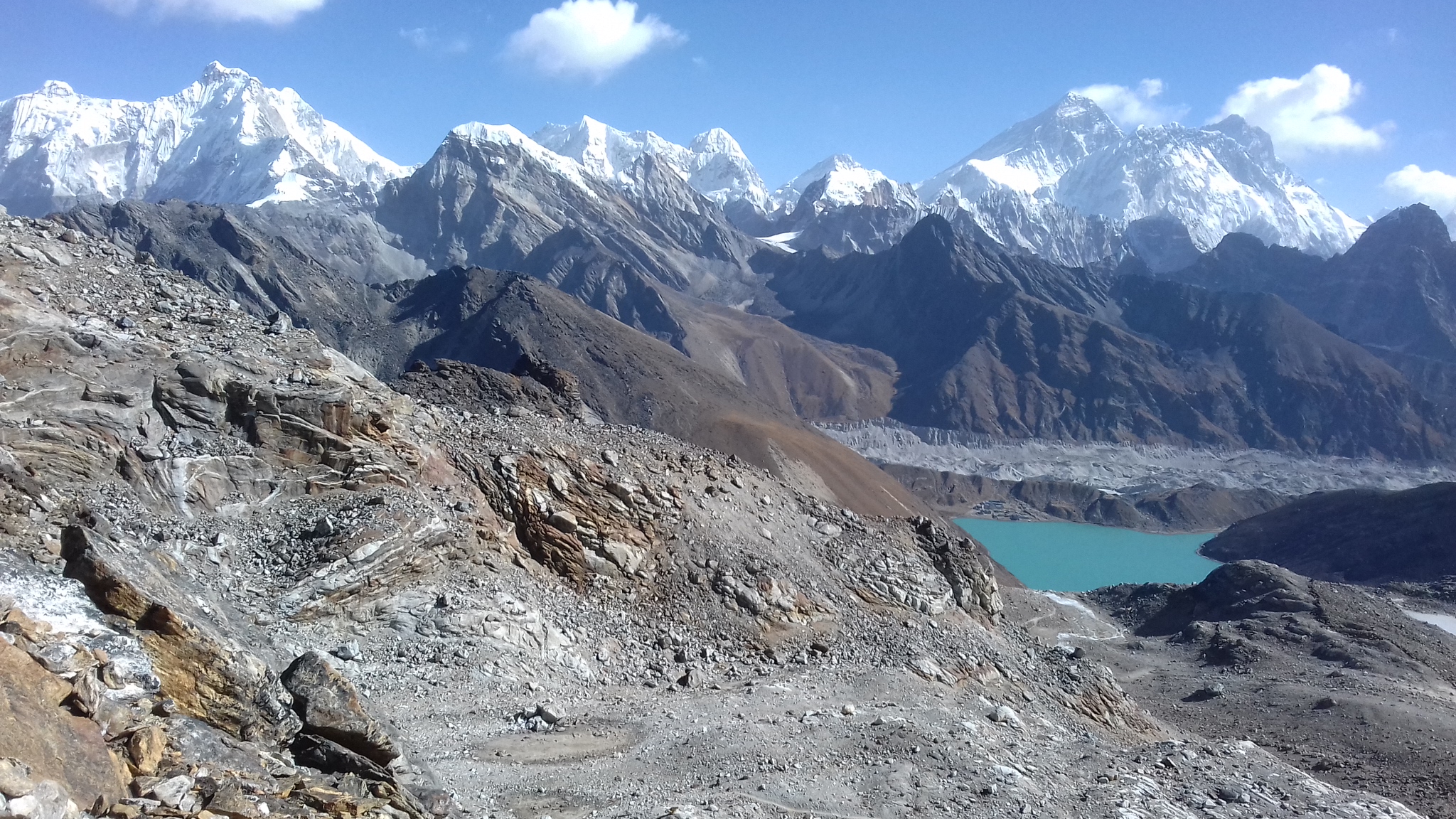
Everest Three Passes Trek

Itinerary

  1. Arrival in Kathmandu, transfer to the hotel.

    Trip briefing, final trek preparation, and welcome dinner in the evening.

    1400 m

  2. Scenic flight to Lukla (2,850 m) and trek to Phakding (2,610 m)

  3. Trek from Phakding to Namche Bazaar

    Cross suspension bridges over the Dudh Koshi River and enter Sagarmatha National Park.

    3440 m

  4. Acclimatization day in Namche Bazaar.

    Optional hike to Everest View Hotel or Khumjung village.

  5. Trek from Namche Bazaar to Tengboche

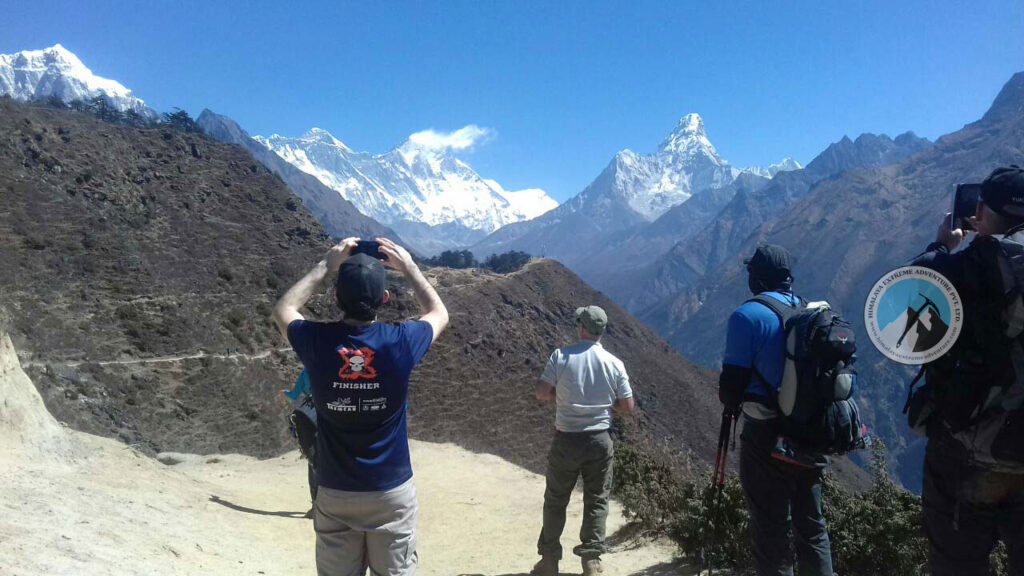
    Visit the famous Tengboche Monastery with views of Everest, Ama Dablam, and Lhotse.

    3865 m

  6. Trek from Tengboche to Dingboche

    4260 m

  7. Acclimatization day in Dingboche.

  8. Short trek from Dingboche to Chhukung

    4750 m

  9. Cross Kongma La Pass (5,535 m) and descend to Lobuche (4,928 m)

  10. Trek to Everest Base Camp (5,364 m) via Gorak Shep.

    Return to Gorak Shep.

  11. Climb Kala Patthar (5,643 m) and trek to Dzongla (4,830 m)

  12. Cross Cho La Pass (5,367 m) and descend to Thagnak (4,750 m)

  13. Trek to Gokyo

    4750 m

  14. Rest day in Gokyo Valley and climb Gokyo Ri

    5375 m

  15. Cross Renjo La Pass (5,360 m) and descend to Lungden

  16. Trek from Lungden to Namche (2,860 m) via Namche

  17. Trek from Namche to Lukla

  18. Flight from Lukla to Kathmandu

  19. International departure

Included / Not Included

Not Included

✈️ International flights

🛂 Nepal entry visa

🛡 Travel insurance with helicopter rescue coverage

🥤 Extra drinks and snacks

🚿 Hot showers, Wi-Fi, and device charging in tea houses

🎒 Personal trekking equipment

💰 Tips for guide and porters

🩺 Personal medical expenses

🚁 Emergency rescue or evacuation

📦 Any service not mentioned under “What’s Included”

Included

✈️ Domestic flights

Kathmandu / Ramechhap – Lukla – Kathmandu / Ramechhap.

🚐 Transportation

Airport transfers in Kathmandu.

🏨 Accommodation

• Hotel accommodation in Kathmandu
• Tea house accommodation during the trek

🍽 Meals

Full board meals during the trek:
breakfast, lunch, and dinner.

☕ Tea or coffee during meals on the trek.

🎉 Special meals

Welcome dinner and celebration dinner.

🧭 Professional mountain team

Licensed trekking guide.

Experienced porters:
✔ 1 porter for 2 trekkers
✔ Maximum load 15 kg per person

🎟 Permits

• Sagarmatha National Park permit
• Khumbu municipality trekking permit

🩺 Health & Safety

First aid kit and regular oxygen level checks during the trek.

✔ Staff salary, insurance, accommodation, and transport included
✔ Government taxes and service charges

Trek details & Safety

Essentials

Difficulty level

The Everest Three Passes Trek is a challenging high-altitude trek recommended for participants with excellent physical fitness and prior trekking experience in mountainous terrain.

No technical climbing skills are required, but trekkers should be comfortable hiking 6–8 hours per day across alpine terrain with steep ascents, rocky sections, and long descents.

The trek crosses three high Himalayan passes — Kongma La (5,535 m), Cho La (5,420 m), and Renjo La (5,360 m) — where altitude, exposure, and consecutive trekking days increase the overall difficulty.

Altitude Awareness

This trek reaches elevations above 5,500 m, where proper acclimatization is essential.

The itinerary is designed with progressive altitude gain and acclimatization days to support safe adaptation to high altitude.

Trekkers are advised to maintain good hydration, steady pacing, and adequate rest. Our experienced Sherpa guides monitor participants throughout the journey to ensure safety and wellbeing.

Guide & Sherpa support

All treks are led by certified local guides and experienced Sherpa teams who manage the route, daily logistics, and safety throughout the journey. Their deep knowledge of the terrain, weather patterns, and mountain conditions ensures a safe and authentic Himalayan trekking experience.

Packing list

Recommended Packing List for High Altitude Trekking

Below is a recommended packing list for high altitude trekking in the Himalayas (up to approximately 5,500 m). Temperatures can be very cold, especially in the early morning and at night, so it is important to bring layered clothing suitable for cold, wind and changing mountain weather conditions.

Clothing

  • Long-sleeve shirts (2–3)
  • Lightweight trekking shirts (1–2) – preferably merino wool or synthetic fabrics
  • Fleece jacket or warm insulating layer
  • Warm down jacket
  • Waterproof and windproof jacket
  • Trekking pants (2 pairs) – at least one wind-resistant
  • Thermal base layer (top and bottom)
  • Thermal leggings
  • Underwear (3–4 pairs)
  • Warm hat or beanie
  • Sun hat or cap
  • Lightweight gloves
  • Technical mountain gloves for cold temperatures
  • Buff or neck gaiter

Footwear

  • Hiking boots (already used and comfortable, Gore-Tex recommended)
  • Comfortable shoes or sneakers for the lodge
  • Trekking socks (3–4 pairs)
  • Warm socks (2 pairs)

Trekking Gear

  • Daypack (30–40 L)
  • Trekking poles
  • Headlamp with spare batteries
  • Sunglasses (UV protection – Category 4 recommended)
  • Water bottles (minimum capacity of 1 liters)
  • Thermal bottle
  • Rain cover for backpack
  • Rain jacket or waterproof shell
  • Dry bags / waterproof bags for protecting clothing and equipment
  • Optional: gaiters (useful in snow or muddy conditions)

Personal Equipment

  • Sleeping bag (minimum rating -15°C recommended, warmer is also fine)
  • Personal basic first aid kit
  • Water purification tablets or portable water filter
  • Sunscreen SPF 50
  • Lip balm with sun protection
  • Hand sanitizer
  • Wet wipes
  • Toilet paper
  • Quick-dry towel
  • Small bag for personal waste

Personal First Aid (Recommended)

  • Personal medication
  • Pain relief tablets
  • Blister treatment
  • Diamox (only if prescribed by your doctor)
  • Water purification tablets
  • Rehydration salts – electrolytes

Documents & Money

  • Passport (valid for at least 6 months)
  • Nepal visa
  • Travel insurance covering high altitude trekking and helicopter rescue
  • Copies of passport and insurance documents
  • Cash for the trek (ATMs and card payments are not available in many trekking regions)

Optional Items

  • Mobile phone
  • Camera
  • Power bank / portable charger
  • Earphones / headphones
  • Personal journal or book
  • Snacks or energy bars

Important Notes

  • Each participant should carry a daypack with essential personal items during the trek.
  • The rest of the luggage will be transported by porters or yaks depending on the itinerary.
  • Weather in the Himalayas can change quickly – always keep warm layers and rain protection in your daypack.

Safety Measures

Your safety is our top priority throughout the trek. Our itineraries are designed to allow proper acclimatization, and our certified guides monitor participants daily for altitude-related symptoms.

  • First aid kit
  • Oximetry monitoring
  • Emergency oxygen
  • Travel insurance required

Important travel information

Important travel information

Himalayan travel takes place in a dynamic mountain environment where weather and trail conditions may vary. For safety reasons, minor itinerary adjustments may occasionally be necessary. Himalaya Extreme Adventure always prioritizes safety, comfort, and the best possible mountain experience.

More information

Visa Information

Most travelers need to obtain a tourist visa to enter Nepal. This visa can be easily obtained upon arrival in the country.

The tourist visa can be arranged:

  • On arrival at Tribhuvan International Airport in Kathmandu
  • At major land border crossings into Nepal
  • In advance at a Nepalese embassy or consulate in your country

Travelers may also complete the visa application form online before arrival, which can help speed up the process at the airport.

To obtain a visa on arrival, travelers must complete the immigration form, present a valid passport, and pay the visa fee.

It is recommended to bring US dollars in cash to pay the visa fee.

In some cases, a passport-sized photo may be required, so it is advisable to bring one with you.

Tourist Visa Fees

  • 15 days: $30 USD
  • 30 days: $50 USD
  • 90 days: $125 USD

Tourist visas are generally issued as multiple-entry visas, allowing travelers to leave and re-enter Nepal during the validity period of the visa.

Indian Citizens

Indian citizens do not require a visa to enter Nepal. However, they must carry a valid passport or an approved identification document when crossing the border.

Travel Insurance

Adequate travel insurance is mandatory for all participants joining our treks and expeditions.

Travel insurance is not included in the trip price, and each participant is responsible for arranging their own policy before traveling to Nepal.

We strongly recommend that your insurance policy covers:

  • Medical expenses abroad
  • Emergency helicopter evacuation
  • Mountain accidents
  • Trip cancellation or interruption
  • Loss or delay of luggage

Helicopter evacuations in the Himalayas can be very expensive, especially in remote areas where road access is limited. For this reason, having proper insurance coverage is essential for your safety and peace of mind.

Altitude Coverage

For most treks in Nepal, we recommend insurance coverage for trekking activities up to at least 4,000–6,000 meters, including emergency helicopter evacuation.

For mountaineering expeditions or peak climbs above 6,000 meters, it is mandatory to have insurance that covers high-altitude mountaineering and rescue operations.

Participants must carefully check that their insurance policy covers the maximum altitude of their chosen trip.

Important Information

Participants should carry a copy of their insurance policy and emergency contact numbers during the trek or expedition.

Having appropriate insurance provides safety and peace of mind for both participants and the mountain team supporting the expedition.

Tipping

Tipping is not mandatory but is a common practice in Nepal and a way to show appreciation for the local team supporting your trek or expedition.

Guides, Sherpas and porters work hard to ensure a safe and enjoyable journey in the mountains, assisting with logistics, equipment and support throughout the route.

As a general guideline, many trekkers choose to tip approximately:

  • Porters: around $8–10 USD per day
  • Guides / Sherpa Guides: around $10–15 USD per day

Tips are usually given at the end of the trek as a gesture of appreciation for the service provided.

The final amount is always at the discretion of each participant and may vary depending on group size and personal satisfaction with the service.

Personal Kit

Each participant should carry a small personal first aid kit with basic medications that may be needed during the trek or expedition.

It is important to bring any personal medication prescribed by your doctor, as well as any specific treatments you normally use.

A personal first aid kit may include, for example:

  • Personal medication
  • Basic pain relief medication
  • Medication for digestive problems
  • Bandages or basic supplies for minor wounds
  • Sunscreen and lip protection

We recommend consulting your doctor before the trip if you require specific medication for high-altitude activities.

Our mountain team carries a group first aid kit and essential safety equipment, but each participant is responsible for their own personal medication.

Ready to experience the Himalayas?

Join a carefully crafted trek designed for those seeking silence, vast landscapes, and a deep connection with the mountains.

What Our Adventurers Say

Real stories from the peaks of Nepal

Our past travelers share the highs, challenges, and unforgettable moments that made their Himalayan journey truly extraordinary.

★★★★★
Martin legault Gokyo Chola Pass Everest Base Camp Canada
Professionnal guide Big experience Have a respect every place during the treck Everything is on control with Pasang. I recommended a 150%
★★★★★
Stephen Tindall Gokyo Chola Pass Everest Base Camp UK
I can honestly say I cannot recommend Pasang enough, I had the best time ever. Pasang is very knowledgeable and has so much passion about what he does. Throughout my trek I felt safe, and very welcomed. Pasang has become a life long friend, what…
★★★★★
Otávio Marcacini Everest Base Camp Trekking Brazil
Great guide, I strongly recommend! He knows a lot about the culture and knows many people. Also, I had the opportunity to have lunch at the EBC with others sherpas, nice experience… Thanks Pasang for guiding me during the EBC trekking!
★★★★★
Jensen Lodge Island Peak Climbling UK
Myself and a pal from Mountain Rescue England and Wales decided to go to Nepal and see the spectacular Himalayan Peaks. They didn’t disappoint. I have done a lot of mountaineering in Europe, Mont Blan, Gran Paradiso Etc. but these are next level…literally. The altitude…
★★★★★
Wayne Storey Island Peak Climbling UK
Had a great experience with Pasang on our Everest base camp and Island Peak trek. Very knowledgeable and friendly and great communication skills 👌

Book this trip

Everest Three Passes Trek